The Orgasmic Rachmaninoff Problem (Or: Why Classical Music Is Afraid of Its Own Body)
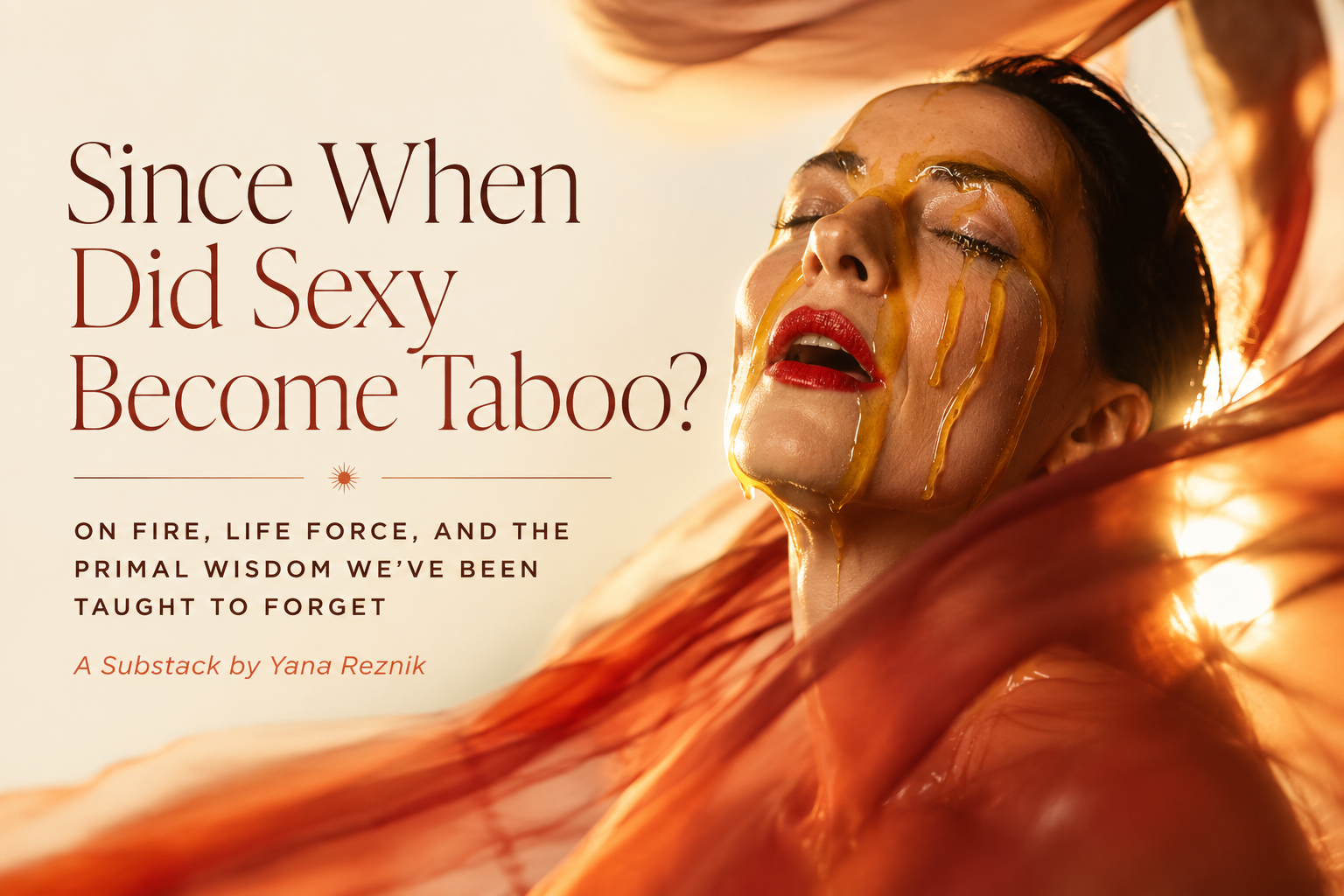
A pianist confesses what we're all too polished to say
Let me tell you what happened the first time I rehearsed the Rachmaninoff Second with orchestra.
We reached the end of the first movement — that place where the music builds until it becomes almost unbearable, where Rachmaninoff seems to be daring you to hold on — and something happened to me that I have never been able to describe with technical language.
A wave of passion threw me completely out of my body. Every cell in a state of exaltation that no musical terminology adequately captures.
The most accurate word I have is: orgasmic.
I am using that word with full intention. Not for provocation. For precision.
The Composers Weren't Confused About This
Franz Liszt had women throwing gloves at him — their own gloves, which they then pressed to their bosoms. He understood exactly what he was doing at the piano and in the room. Mozart was irreverent, bawdy, and beloved in the royal courts. Brahms spent years performing in brothels, developing an understanding of human desire that went considerably beyond the page. Bach had twenty children and reportedly couldn't stop having them.
These are the canonical giants of the Western classical tradition. And not one of them seems to have been confused about the relationship between music and the body, between artistry and aliveness, between what happens at the instrument and what happens in the bloodstream.
That confusion is ours. We invented it.
Somewhere between then and now, the classical music world decided that the most appropriate response to transcendent art was intellectual distance. That the body at the piano should be controlled, contained, and if possible, invisible. That passion was acceptable as an abstract concept but slightly embarrassing as an actual experience.
The Yuja Wang Symptom
Consider how much column space — including, let us be honest, on platforms like this one — has been devoted to Yuja Wang's dresses.
One of the most technically brilliant and emotionally electric pianists of her generation. And the recurring conversation, year after year, is about her hemline.
The discomfort her presentation generates is not actually about fashion. It is about the fact that she refuses to perform the disappearing act that classical music has come to expect from its performers — that studied neutrality, that suggestion that the artist is merely a conduit for the notes and has no body, no desire, no fire of their own.
She has a body. She has fire. She lets you feel it. This makes people deeply uncomfortable.
That discomfort is the diagnosis.
What We've Been Separating
Music's primary function — its most ancient, primal purpose — is not to demonstrate technical mastery or historical fidelity. It is to evoke feeling. To reach inside the listener and move something. To make contact with whatever is most alive in a human being and ignite it.
The word ignite is not metaphorical here.
There is a fire in the body — a life force, a primal energy — that music was always meant to tend. Every drumbeat around every ancient fire, every voice raised in ritual, every instrument ever built has been in service of that same function: to wake something up. To remind the body of what it already knows. To bring the full human animal back online.
The classical tradition carries this inheritance. It sits inside every Beethoven symphony, every Schubert song, every bar of Rachmaninoff. The fire is still in there.
What has changed is our permission to feel it.
We have learned to analyze instead of surrender. To intellectualize the experience rather than be moved by it. To keep passion in the program notes and manage the actual encounter with the music from a safe, respectable distance.
This is not sophistication. It is estrangement.
What Gets Lost
When performers are trained — implicitly or explicitly — to contain rather than channel their aliveness, something essential leaves the room.
The audience feels it. Not always consciously, but they feel it. There is a difference between watching someone play the notes correctly and watching someone burn. Audiences have always known this difference. They crossed continents to hear Liszt. They wept in the stalls for Callas. They still pack arenas for pianists who refuse to disappear.
The fire is the whole point. It always was.
And when it isn't being allowed to burn its brightest — when performers have learned to quiet it, manage it, make it appropriate — everything becomes dim. Technically impeccable, historically informed, critically approved, and somehow dim.
A Different Question
What if the orgasmic Rachmaninoff moment is not an embarrassing overshare?
What if it is the most honest description of what this music is actually for?
What if the discomfort it produces — in concert halls, in conservatories, in comment sections — is precisely the discomfort of an institution that has spent decades separating from its own body, its own fire, its own most primal reason for existing?
The composers were not confused. The ancient tradition that music descends from was not confused. The audiences who have always shown up, across every culture and century, to be moved — they are not confused.
The fire has not gone anywhere. It is still in the music, waiting.
The only question is whether we have the nerve to tend it.
Yana Reznik is a pianist and inner development guide. She writes about the psychology of musical life, the body at the instrument, and the fire that classical music has been trying to forget. Find her at inspojourney.com.